Describe a salon finish with coverage, reflection and an ordinary view
A saved image can conceal important decisions about nail length, product system, lighting and finish. Prepare a short visual brief for a salon conversation. Describe the result you want in observable terms and ask how it can be achieved appropriately, rather than assuming an image identifies the process.
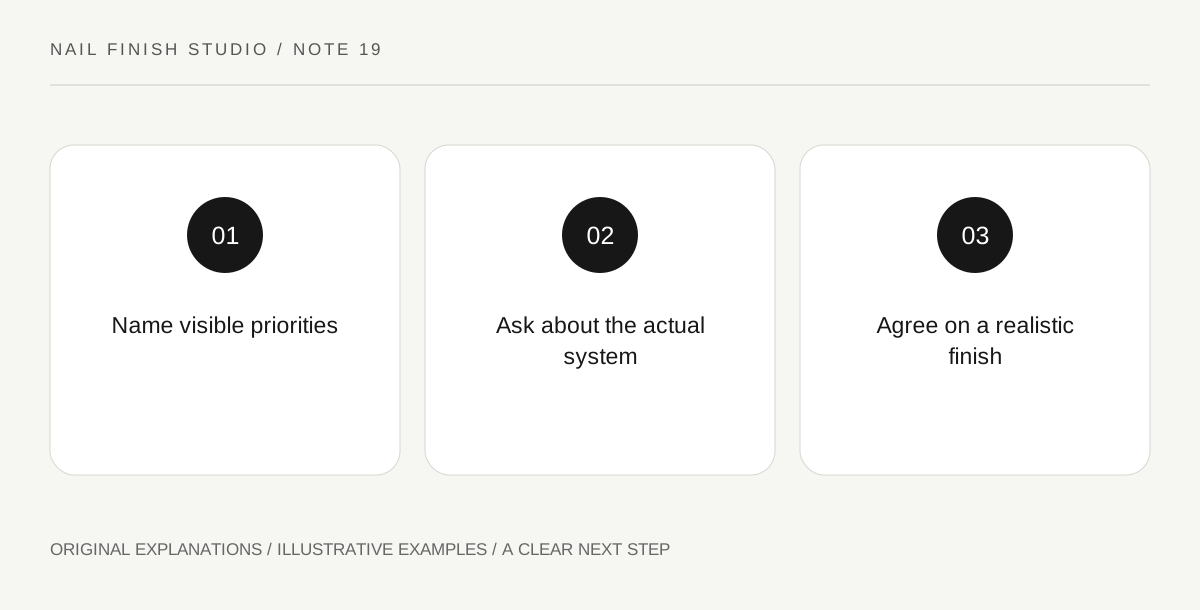
Original explanatory diagram. Read the full method and limitations below.
Name three visible priorities
Write the desired coverage, surface reflection and amount of detail. For example, you might want an opaque dark color, a smooth glossy appearance and no additional motif. These priorities are more useful than a vague request for expensive-looking nails. Keep personal comfort and practical length requirements visible too. A clear brief leaves room for the professional to explain what suits the actual nails and their supported services without guessing which part of the reference matters most.
Choose a reference that shows an ordinary view
If using an image, look for a view that makes the whole nail shape and finish understandable. Strong colored lighting or a dramatic close-up may exaggerate reflection and hide length. Say explicitly which feature you like and which you do not need copied. Do not assume a photograph proves a product is conventional lacquer or that the surface can be reproduced through the exact process you already know. Ask rather than infer.
Discuss process and removal before the appointment
Ask what system the salon proposes, what the service includes and how removal and follow-up are handled. Share relevant past reactions and concerns rather than focusing only on color. Follow appropriate nail-care guidance and do not seek cosmetic coverage as a substitute for assessment of a concerning nail change. The conversation should make the full use cycle understandable before you agree to a method, including any maintenance you are expected to perform at home.
Confirm the priority if a compromise is needed
A particular reference may not suit your preferred length, product choice or available appointment. Decide which feature matters most and ask for a simpler supported alternative. Perhaps the color and gloss can remain while a complicated surface effect is omitted. Record what was agreed in ordinary language. The useful outcome is shared understanding of the intended result, not pressure on either person to promise an exact match to an edited image.
Illustrative worked example
Illustrative scenario: a client brings a dramatic reflective reference but says their priorities are short practical length and conventional lacquer. The salon explains the difference between that image's likely effect and its available lacquer finishes. They agree on an opaque silver-looking finish with a realistic reflection and discuss removal. The client keeps the central visual idea while making the process explicit before the service begins.
Questions that come up
Should I ask for an exact image copy?
Explain what you like and invite a realistic discussion. Nail shape, materials, lighting and technique can differ, so a clearly prioritized brief is more useful than an absolute promise.
What if my nail looks newly discolored or damaged?
Raise the concern and seek appropriate medical advice rather than using cosmetic coverage to hide it. A design appointment does not replace assessment of a concerning change.
References and scope
These sources support the factual background. Examples and exercises are original illustrative teaching material. References do not imply endorsement.
- FDA: Nail Care Products — Follow labels and warnings, provide ventilation and handle potentially flammable nail products safely.
- AAD: Manicure and Pedicure Safety — General nail-care boundaries and seeking professional care for concerning nail changes.