Judge pastel coverage after the supported sequence, not the first streak
A pale lacquer may look patchy during an early stage, inviting repeated correction before the planned application is complete. Use practice swatches to distinguish an in-progress layer from the final result. Keep the product directions central and avoid treating every visible streak as a reason to add more product immediately.
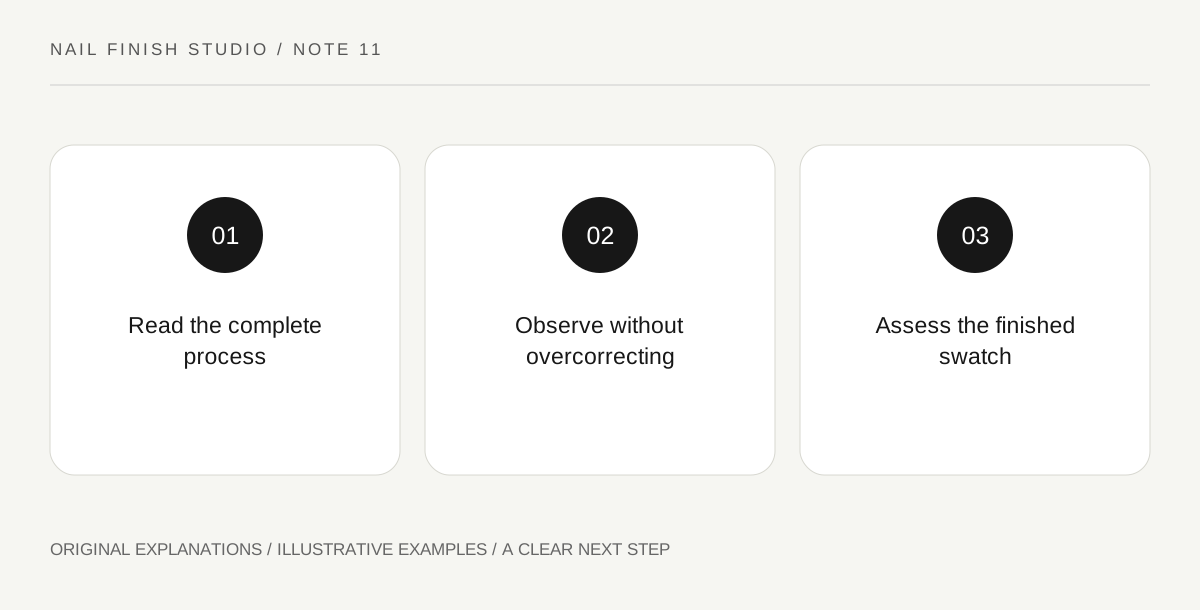
Original explanatory diagram. Read the full method and limitations below.
Record the actual product process
Read the instructions for base preparation, color application and finishing. Note the supported number and character of layers without borrowing another brand's routine. A pastel color name does not identify a universal formula. Prepare an appropriate practice surface and label the product. Keep the setup simple enough that you can repeat the process without changing the base, brush and finish at the same time, which would obscure what caused the difference.
Observe each stage without rescuing it
Photograph or note the first stage if helpful, but resist extra handling solely to make an intermediate layer look complete. Follow the required interval and next step. On a practice tip, compare the result after the supported sequence with the earlier appearance. The useful question is whether the intended process resolves the coverage, not whether every moment during application resembles a finished promotional image. Avoid universal waiting times that the label does not provide.
Identify the recurring handling problem
If unevenness remains, describe its shape and location. Is the center thin, are edges crowded, or did repeated strokes disturb a setting area? Those observations support a more focused next attempt than simply saying pastel polish is difficult. Do not compensate by thickening every coat indefinitely. If the formula has changed noticeably or will not behave as directed, use the manufacturer's care and replacement guidance rather than adding unsupported solvents.
Choose a manageable visual target
Some pale products are intentionally translucent. Decide whether you want soft coverage or an opaque pastel block and select a product suited to that role. Save the finished swatch and its sequence so you can make the distinction later. A well-understood sheer pale finish is more useful than an overworked attempt to force opacity. The result should represent a supported process you can repeat comfortably, not a hidden accumulation of rescue layers.
Illustrative worked example
Illustrative scenario: a learner revisits every pale patch in a first lavender layer, creating heavy edges on a practice tip. On the next attempt they follow the product sequence without extra rescue strokes and compare only the completed results. The second sample has a clearer outline and meets their coverage goal. Their note identifies repeated correction as the changed action, without claiming all pastel formulas behave alike.
Questions that come up
Should every pastel be opaque?
No. Pale color and opacity are separate characteristics. Read the actual description and use a swatch to see whether its intended appearance matches your goal.
Can a thicker first layer save time?
Follow the product directions. A personally invented heavy layer can change drying and handling without reliably solving the coverage issue you observed.
References and scope
These sources support the factual background. Examples and exercises are original illustrative teaching material. References do not imply endorsement.
- FDA: Nail Care Products — Follow labels and warnings, provide ventilation and handle potentially flammable nail products safely.
- Essie: Arctic Jelly — Manufacturer description of a sheer buildable white jelly finish, not independent performance verification.