Use a plain cream lacquer to study edges before adding decoration
A plain cream-colored finish reveals the boundary of the painted shape clearly. Use it as a practice subject rather than considering it merely a background for nail art. Work on suitable practice tips first, following the lacquer directions and avoiding any need to correct product on skin.
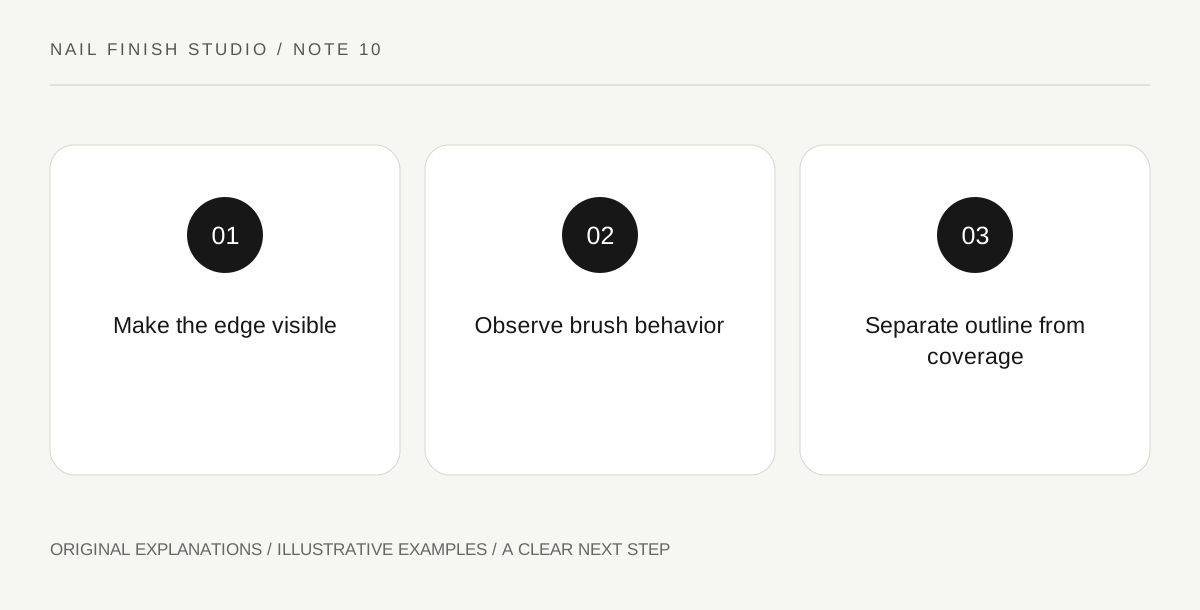
Original explanatory diagram. Read the full method and limitations below.
Choose contrast that makes the edge visible
Select a conventional opaque-looking cream finish that contrasts with the practice surface. The goal is to see the outline and coverage, not to choose a universally flattering shade. Label the product and supported application sequence. A very sheer or highly reflective polish can hide the boundary you are trying to study. Keeping the surface visually simple makes it easier to notice where the brush starts, widens and leaves the edge.
Observe the brush shape
Look at the width and curvature of the actual brush before loading it. Different brushes spread differently, so do not assume a video's exact stroke count applies. On a compatible practice surface, use the product's recommended method and observe how pressure affects width. Keep the tool clean and product contained according to its instructions. The lesson is controlled handling of this brush, rather than forcing every brush into the same motion.
Separate placement from coverage
First assess whether the painted outline sits where intended. Then look at whether the interior coverage is even after the supported sequence. These are different skills. Repeatedly widening the outline to fix a thin patch can create a larger boundary error. Use the practice result to identify the next small adjustment, such as a calmer starting position or less repeated movement, rather than changing color, brush and application approach together.
Keep a baseline sample
Save one useful practice tip and write what went well. The sample need not be flawless to serve as a reference. Compare later attempts against the same target and viewing distance. When moving to natural nails, follow appropriate product and nail-care guidance and avoid flooding surrounding skin. If the routine becomes uncomfortable or causes a reaction, stop. Decorative precision never requires ignoring discomfort or treating irritation as a normal training step.
Illustrative worked example
Illustrative scenario: a beginner uses an opaque coral lacquer on practice tips. Their first outline expands each time they revisit a pale area. They separate the observations and discover that placement is the main issue, while coverage follows the supported next layer. A second practice attempt uses a more deliberate boundary and fewer corrections. The saved sample documents a handling improvement without claiming salon-level skill or product performance.
Questions that come up
Is an opaque cream easier for everyone?
It is useful here because it makes an edge visible. Individual brushes, formulas and preferences vary, so treat it as a learning choice rather than a universal ranking.
Should I keep fixing every small imperfection?
Repeated handling can disturb the layer. Follow the product process and use the practice sample to plan the next attempt rather than turning one surface into endless correction.
References and scope
These sources support the factual background. Examples and exercises are original illustrative teaching material. References do not imply endorsement.
- FDA: Nail Care Products — Follow labels and warnings, provide ventilation and handle potentially flammable nail products safely.
- AAD: Manicure and Pedicure Safety — General nail-care boundaries and seeking professional care for concerning nail changes.