Read metallic lacquer by the reflection line it creates
A metallic-looking lacquer can reveal the direction of application and the shape of reflected light more clearly than a plain cream. Study those features on practice swatches. The aim is a controlled visual finish using the product's instructions, not a promise of a mirror surface from any silver bottle.
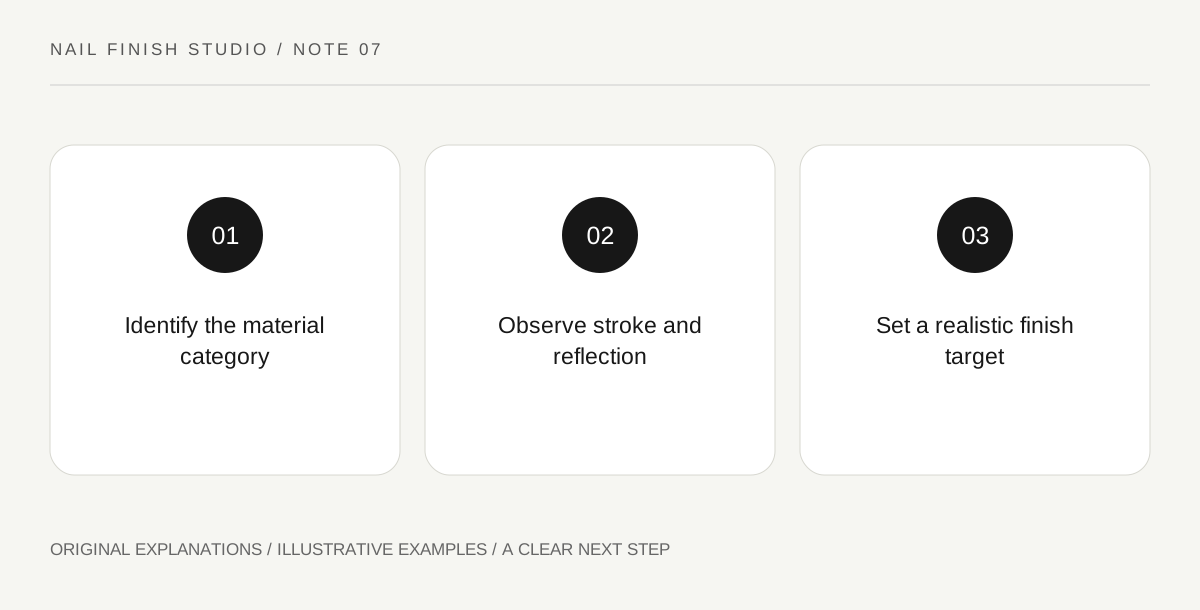
Original explanatory diagram. Read the full method and limitations below.
Choose the visual comparison carefully
Prepare a metallic-looking swatch and a plain color swatch with roughly similar lightness if you have them. Follow each product's directions rather than forcing identical techniques where the instructions differ. View both under the same light. Notice whether a broad bright band or smaller reflective marks dominate the metallic surface. Words such as chrome, foil and metallic are sometimes used loosely, so describe the observed appearance as well as the label.
Observe application direction without overworking
On a separate practice surface, use the supported brush method and pay attention to the final direction of the strokes. Do not repeatedly drag through a setting layer in pursuit of perfect lines. If the product instructions specify preparation or a particular sequence, keep those details constant. Record the point where extra correction begins to disturb the surface. A useful practice session identifies a workable method rather than accumulating increasingly heavy layers.
Match the reflection to the design scale
Look at the swatch from ordinary distance. A strong reflective band may already create enough visual structure for a small nail. Additional tiny marks can become difficult to distinguish against it. Compare a completely plain metallic surface with a sketched idea on paper before applying decorations. The clean version may be the stronger choice when the purpose is to show the finish rather than a separate motif.
Use realistic expectations in the record
Photographs of chrome powders, professional systems and conventional metallic lacquer can depict different materials and processes. Identify which product category your reference actually uses before expecting the same result. This collection concerns air-drying lacquer, so do not improvise a curing or powder system to imitate an image. Keep the successful swatch as its own finish and record the actual product rather than naming it after a different technique.
Illustrative worked example
Illustrative scenario: a learner saves a highly reflective nail image and buys a conventional silver lacquer. Their swatch shows a soft metallic band rather than a mirror. They identify that the reference used a different system and reset the goal to an even brushed-metal impression. A plain swatch now meets the design brief, avoiding unnecessary attempts to reproduce a process they are not equipped to perform.
Questions that come up
Does metallic lacquer require a lamp?
Check the actual label. A finish word does not identify the chemistry or curing process; conventional lacquer and professional gel systems need different handling.
Can a topcoat guarantee a mirror effect?
No universal guarantee follows from the name. Use a compatible product as directed and judge the actual swatch rather than expecting it to convert one material category into another.
References and scope
These sources support the factual background. Examples and exercises are original illustrative teaching material. References do not imply endorsement.
- FDA: Nail Care Products — Follow labels and warnings, provide ventilation and handle potentially flammable nail products safely.