Set an opacity target for a jelly lacquer before adding layers
A translucent manicure can look unfinished if it is judged against an opaque target it was never meant to meet. Decide what should remain visible before beginning. Use conventional air-drying lacquer identified on its label, and explore the color on practice swatches before changing a manicure.
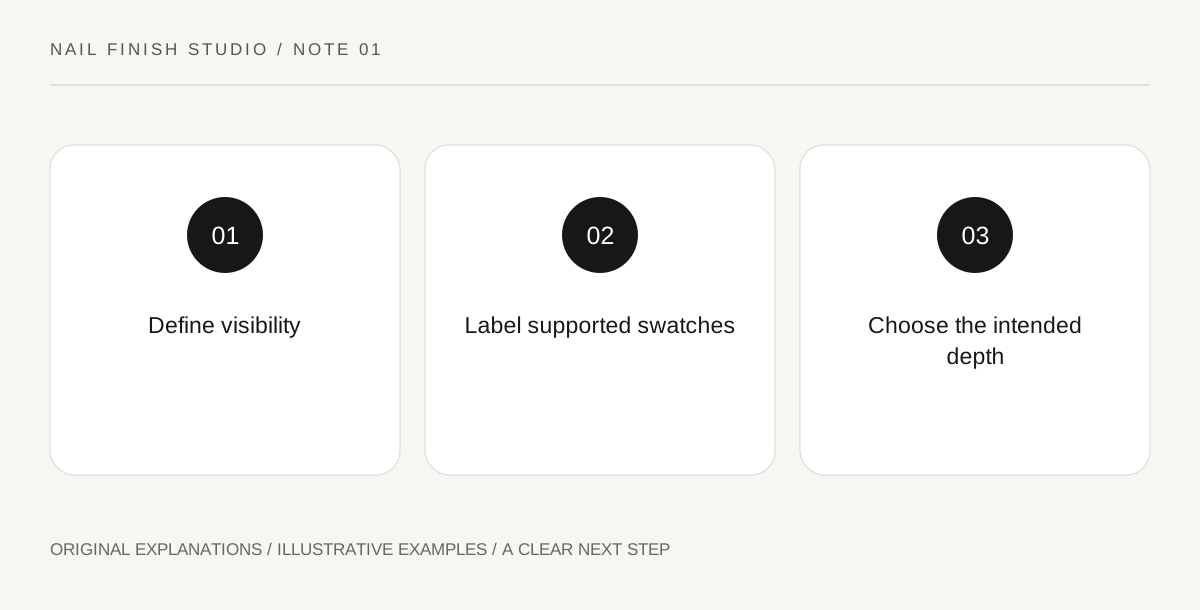
Original explanatory diagram. Read the full method and limitations below.
Describe what you want to see through
Write a visual target such as a light tinted veil or a deeper translucent wash. Those descriptions concern coverage rather than quality. Sketch a pale background with a darker line and imagine how much of that line should remain visible. The exercise helps distinguish uneven application from deliberate transparency. A sheer polish should not be expected to hide every feature merely because another color in the same bottle shape does so.
Make a controlled swatch sequence
Use compatible practice surfaces and apply the product according to its directions. Label swatches by the actual layer sequence, keeping the background and lighting consistent. Stay within the supported application method rather than adding unlimited coats to force an opaque result. Essie describes its named Arctic Jelly product as sheer and buildable; that example does not establish identical behavior for every lacquer advertised with the word jelly.
Compare depth with remaining visibility
Once the swatches are ready to assess, observe both the color intensity and what remains visible beneath it. A darker tint can still be transparent. Move the samples from a close inspection to ordinary hand-viewing distance. Decide whether the intended effect reads without requiring a camera zoom. Record the layer sequence that best matches your target instead of automatically favoring the deepest color in the series.
Choose a finish that supports the idea
Evaluate the compatible finish prescribed by the lacquer system and observe how reflected light affects the translucent look. Keep gloss distinct from opacity: a shiny surface does not make the color underneath more covering. If the desired result requires hiding the background completely, select a suitable opaque product rather than treating the jelly as a failed version of one. The comparison should end in a design decision, not an argument with the formula.
Illustrative worked example
Illustrative scenario: a learner wants a smoky translucent blue on practice tips. Their first target says dark blue, which leaves opacity unclear. They rewrite it as a visible underlying line with a stronger blue tint. Two supported swatch sequences reveal the distinction. The learner chooses the sequence that preserves the intended visibility and labels it accurately, without claiming the product will look identical on every natural nail.
Questions that come up
Does sheer mean poor pigmentation?
It can describe an intentional visual effect. Evaluate whether the actual product suits the coverage you want rather than treating opacity as the only measure of success.
Can I thin an opaque polish into a jelly?
Do not improvise with household solvents or mix products without manufacturer support. A purpose-made compatible lacquer is a clearer starting point for this exercise.
References and scope
These sources support the factual background. Examples and exercises are original illustrative teaching material. References do not imply endorsement.
- FDA: Nail Care Products — Follow labels and warnings, provide ventilation and handle potentially flammable nail products safely.
- Essie: Arctic Jelly — Manufacturer description of a sheer buildable white jelly finish, not independent performance verification.